About
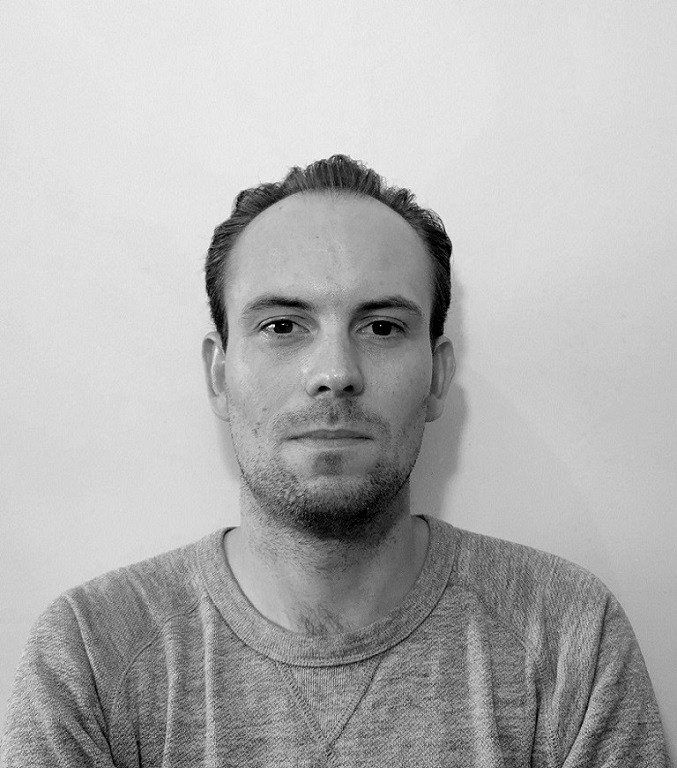
Lancelot Blondeel is a contemporary painter born in 1988. Trained as an engineer, he now works in Fontenay-sous-Bois, near Paris.
Collective exhibitions & events (selection)
2026 | Biennial of Contemporary Art of Strassen | Strassen, Luxembourg – By committee
| Entrez c’est ouvertThird place Dédale | Fontenay-sous-Bois, France – Reference collective exhibition
| The Contemporary Meetings of Beaune | Beaune, France – 3rd place at the public price
| Inauguration of the third place Dédale | Fontenay-sous-Bois, France – Collective exhibition, participatory work, presentation of an in-situ installation and reception of institutional actors
2025 | Résonances du Présent, Muisca Gallery | Paris, France
| Hôtel de Ville de Vincennes | Vincennes, France
| Entrez c’est ouvert, temporary workshop at Halle Roublot | Fontenay-sous-Bois, France – Cultural mediation and presentation of tools and working methods to the public
| The Foundry | Fontenay-sous-Bois, France
2024 | Expressions contemporaines, Gallery 12 | Paris, France – Exhibition organised in a private setting
| Entre-deux ; regard de collectionneurGallery 12, rue des Beaux-Arts | Paris, France – At the invitation of the galerist, exhibited alongside Hans Hartung, Bernar Venet, Caesar, Georges Mathieu, Henri Michaux, Joan Miró, Picasso...
2023 | Salon des Artistes du Val-de-Marne | Saint-Maur, France – On committee
| Francis Barlier Gallery | Paris, France – At the invitation of the exhibition commissioner
Personal exhibitions (non-dedicated spaces art)
2026 | Ephemeral workshop (to come, September) | Vincennes, France
| Acten Notaires (forthcoming, September/October) | Paris, France
2024/25 | Verneuil Immobilier | Paris, France
2023 | At the Tables | Paris, France
Collections
Public procurement | Artothèque Paris Est Marne & Bois – 2024
Private acquisitions | France, Germany, Italy, Luxembourg, United States
Residencies / Studios
2025/26 | Third place Dédale | Fontenay-sub-Bois
2024/25 | Le Préàvie | Le Pré-Saint-Gervais, France
Education
2023/24 | École du Louvre | Paris, France – History of Art in free auditor
2021 | Biola University | Los Angeles, USA – Contemporary Art Trends by Jonathan Anderson (online), courses on abstract expressionism, minimalism, conceptual art, land art, light art, etc.
2007/13 | ECE Paris, Engineering School, Master | Paris, France
Artistic approach
Lancelot Blondeel develops a gestural approach, creating a body of work conceived in relation to movement. Through the body, the painter builds a memory of gesture, leaving imprints and furrows on the support. These singular traces are revealed through the combination of complementary materials: transparent substances, paper, or cotton canvas.
Giving particular importance to the circulation of light through his works, the artist questions the way reality makes itself visible. By exploring the mechanics of the senses and perception, his works engage the viewer in a reflective position and raise questions about our modes of presence in the world.
Technique & Process__
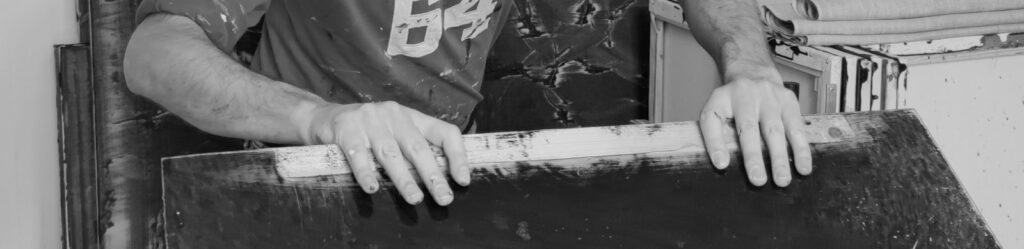
Lancelot Blondeel works on paper, wood, and cotton canvas. He also uses materials that allow light to pass through, such as plexiglass, transparent canvas, and silk paper. He paints in acrylics, starting from primary colours and reworking his hues with pigments or additional tones. His technique is characterised by the use of handmade tools - primarily scrapers - with the particularity of working flat on a rigid support.
The addition and removal of matter are integral to his pictorial practice; he amplifies, concentrates, or refines the thickness of paint at precise points across the surface, guided equally by sight and touch. This tactile sensitivity during the making is inseparable from the final visual result.
Stylistic Work___
Dans ses recherches en abstraction, Lancelot Blondeel étudie la gestuelle et la géométrie. L’approche gestuelle est pensée dans son rapport au mouvement : « sur la toile vient persister une mémoire du geste ». Ainsi le corps de l’artiste est consciemment placé de façon à figer une dynamique sur le subjectile.
Compositions are organised around curved lines and asymmetric forms, in which negative space plays an active role - counterweight and breathing room are the conditions for the legibility of form. The artist favours monochrome or two-colour palettes with strong contrasts; chromatic reduction focuses attention on matter, depth, and light.
Vision___
Lancelot Blondeel part d’un constat fort : nous n’accédons jamais directement au réel. Les sciences cognitives le confirment : toute perception est une construction, filtrée et déformée par l’appareil sensoriel et mental de celui ou celle qui perçoit. Ce que nous appelons « voir » est déjà une mise en forme subjective du monde. C’est précisément cet écart – entre ce qui est – et ce qui est perçu, que ses œuvres cherchent à rendre intelligible. En jouant sur la transparence et le reflet, l’artiste fabrique des situations où la perception elle-même devient instable : le regard du spectateur modifie ce qu’il voit. L’œuvre ne représente pas le doute, elle le produit.