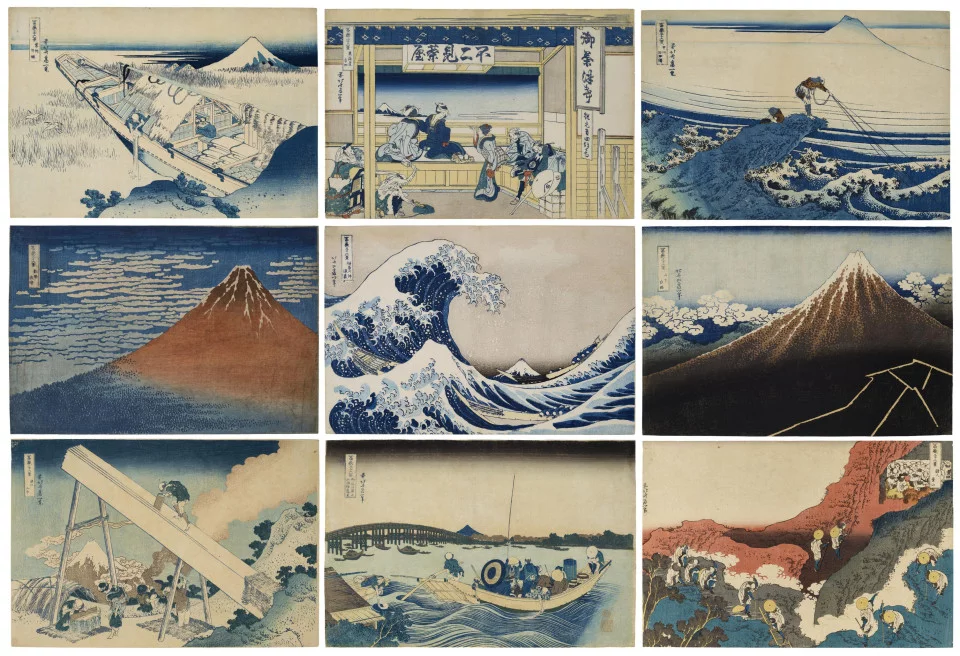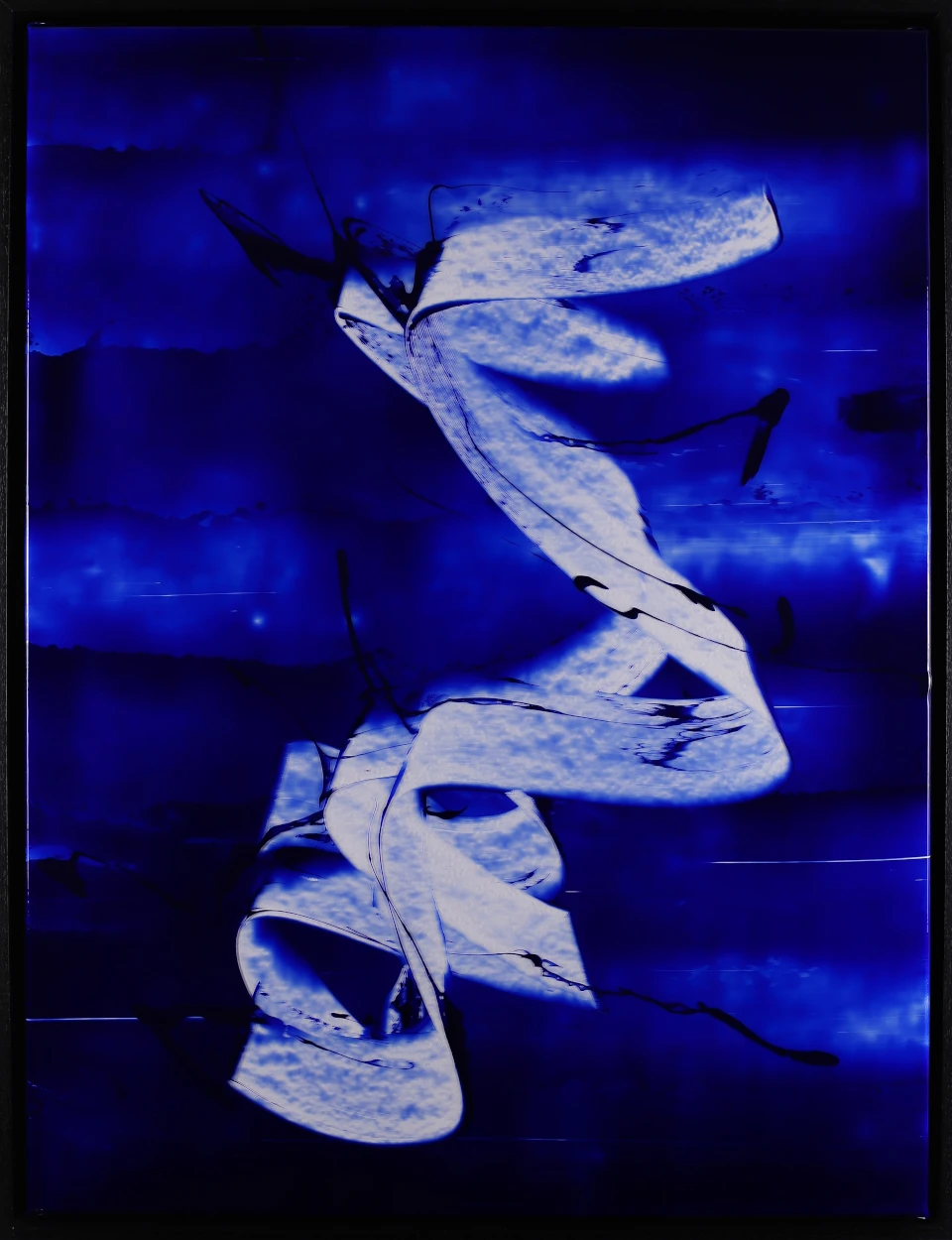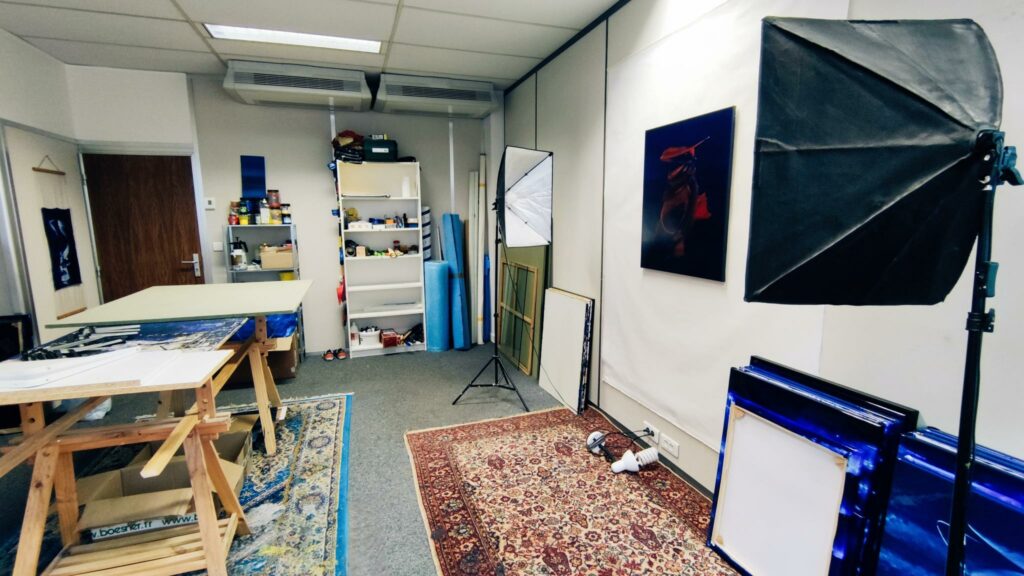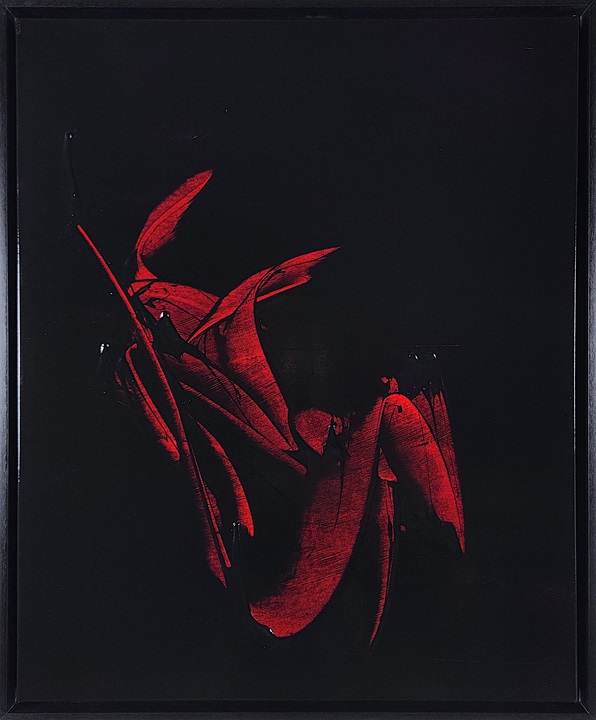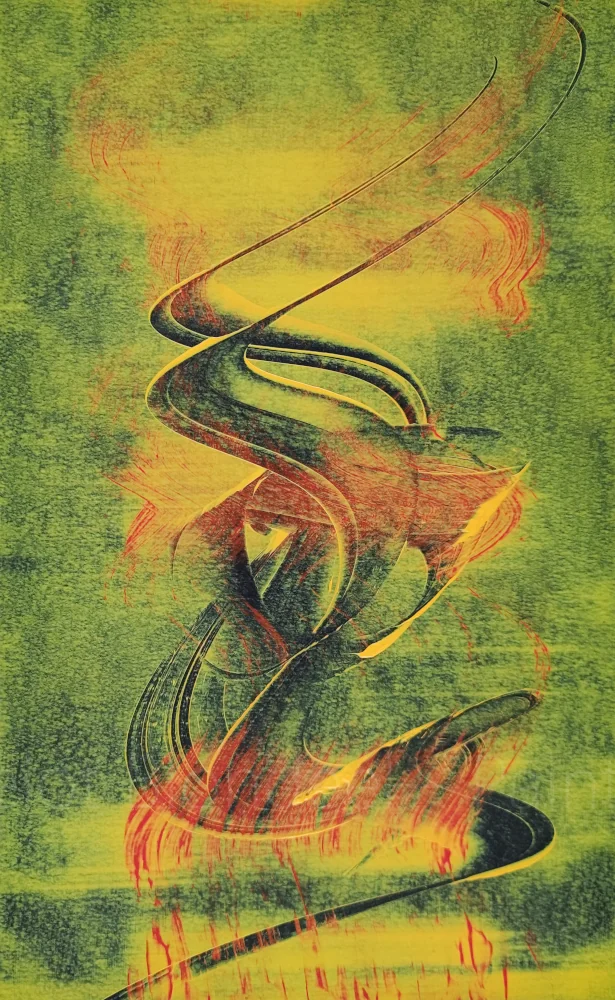
All paintings in the series Luminotype share as a starting point a unique color: overseas blue. I suggest you see how and why this particular color holds a central place in the series.
A force, a depth
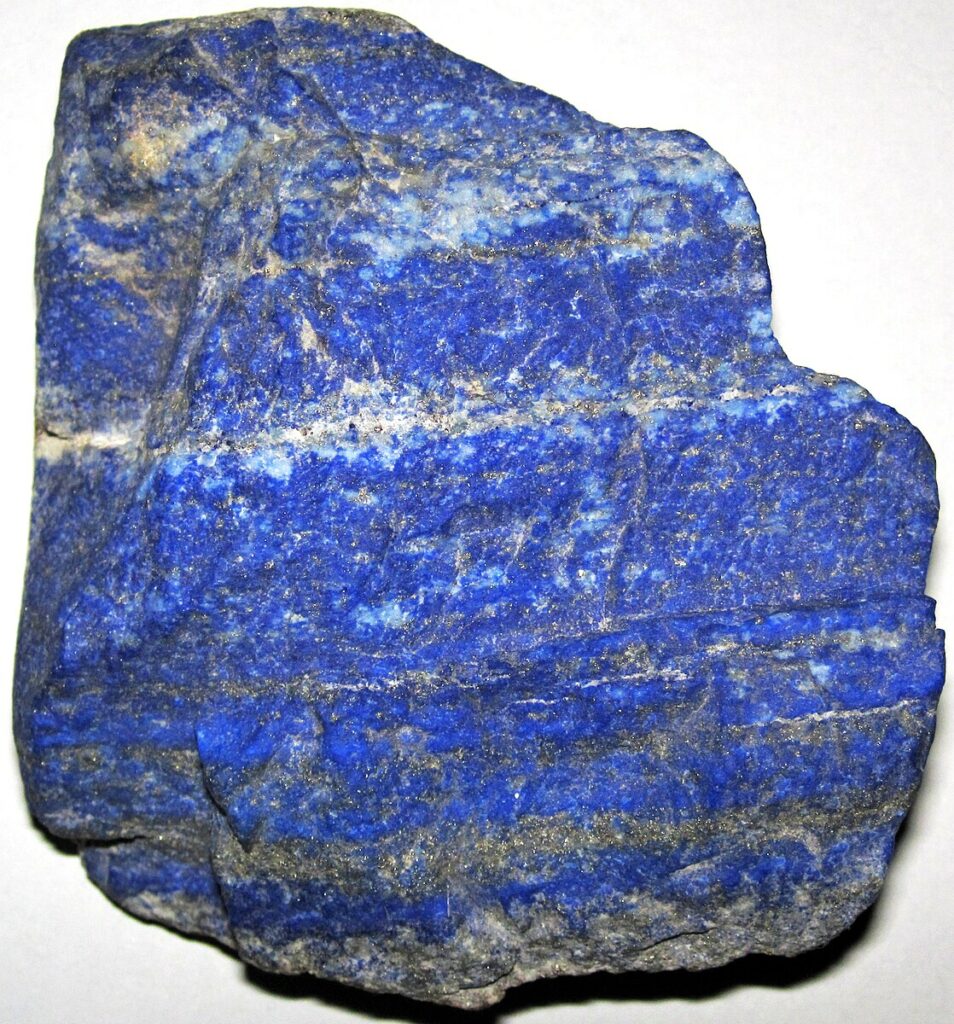
I chose the overseas blue not only for the color itself, but keeping in mind the history of the pigment that is intimately associated with it: lapis-lazuli. I am far from being the first fascinated by this color; pigment has been used in the East and West for millennia. I find him a strength, a depth that I find in no other color. The word iridescent seems to me the most appropriate. You feel in this term something that comes out of the light. It is not at all a coincidence that overseas blue has been repeatedly used in Christian religious scenes.
I also learned the etymology of the term lapis-lazuli: the name derives from Latin lapis, which means stone, and of lazuli, which means azure and which itself comes from Persian lâdjaward, himself of Sanskrit raja varta, which means king's portion (raja : King, varta : portion). In a way, you hold in your hands a fragment of royalty. I find it quite touching to be linked to a term that emerged on the other side of the planet.
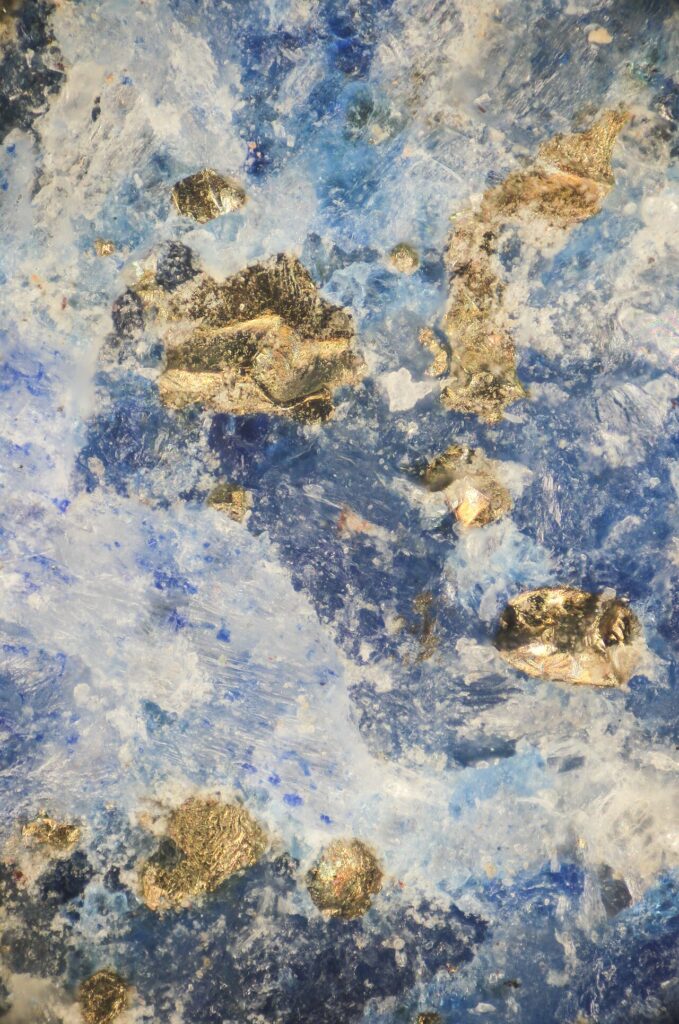
Lapis-lazuli, a semi-precious stone
But let's go back to our pigment. So we are dealing with a semi-precious stone which, reduced to extremely fine powder and then decanted many times, will produce an exceptional color. In addition to its unique colour, lapis-lazuli had another characteristic that made it so special: it was only extracted from one place on earth, in present-day Afghanistan. This makes that in the West, from the Middle Ages to the 19th century, it was an extremely expensive material that sometimes approached or exceeded the price of gold.
One imagines that in painting its use has been particularly measured. It even seems to me that during the Renaissance, during the orders, the precise quantity of stone was noted in the contracts between the artists and their patrons. Until the day when, by serendipity, a French chemist found in 1814 a way to artificially synthesize it. Since then, we can use it in unreasonable quantities, which obviously makes it easier — even more when making an entire series with this color. If you're curious, I invite you to discover the many uses of stone in art, jewellery, everywhere: it's quite impressive. I will not mention the list of artists who worked with this color before me — There are far too many of them.
A certain vision of infinity
Instead, I will highlight the direction I have directed myself towards: the color space between the overseas blue and the black, which I find most fascinating. There is simply a depth, like a certain vision of infinity. It's kind of like, beyond that color, another world was possible. It is a diffuse feeling, rather difficult to describe — I pass it on to you as I feel it.
And what do you think of this color?